
Frankly: There's always fear in the room
Last time, we wrote about what happens when a good communications workshop stops being about communications and starts being about people.
Since then, we've been thinking about the other end of that process – what people bring into the room in the first place.
And almost always, there's a little bit of fear. Not big fear. Nobody's hiding under the boardroom table. It's the everyday, socially acceptable kind.
What are they going to ask me?
What if I don't know the answer?
What if I disagree with everyone else?
Is this going to create more work?
Are we about to change something I actually think is working?
What if I say what I really think?
Sometimes it's even simpler than that: Please God, are they going to make me do an icebreaker?
We get it.
Workshops ask something of people that average work day often doesn't. They ask us to stop doing and start thinking.
And thinking out loud, in front of other people, can feel surprisingly exposing. There's no email to carefully draft and redraft. No report to hide behind. No time to check what everyone else thinks before deciding what you think.
Someone asks a question…And there you are.
Over the years in this job, we've seen incredibly capable people preface perfectly sensible contributions with, "This might be stupid, but..." We've watched people glance around the room before answering, checking where everyone else stands. We've seen the most senior person there speak first and unwittingly determine what everyone else will say next. And we've watched people visibly relax when somebody finally says the thing everyone else was thinking.
That's why the beginning of a workshop matters so much.
Before you can get to the good stuff – the ideas, the connections, the moments when somebody says, "Hang on, what if..." people need to feel safe enough to participate properly. Openly. And that doesn't come from a clever activity or a colourful stack of Post-it notes.
It comes from trust.
Trust that there isn't a predetermined right answer. Trust that disagreement isn't going to be punished. Trust that nobody is being tested. Trust that the people running the workshop are genuinely interested in understanding, rather than arriving with the answer already tucked away in a PowerPoint presentation.
Perhaps most importantly, trust that saying "I don't know" is allowed.
Because "I don't know" is often where the interesting work starts. So is "We've never really talked about that." And "Actually, I see it differently." And our personal favourite: "I've been thinking this for ages, but..."
These are the moments when a workshop starts doing what it's actually there to do.
The room changes. People stop trying to give the right answer and start giving the honest one. They listen differently. They challenge each other. One idea unlocks another. And gradually, the caution that walked into the room gets replaced by curiosity.
That's when you start getting somewhere.
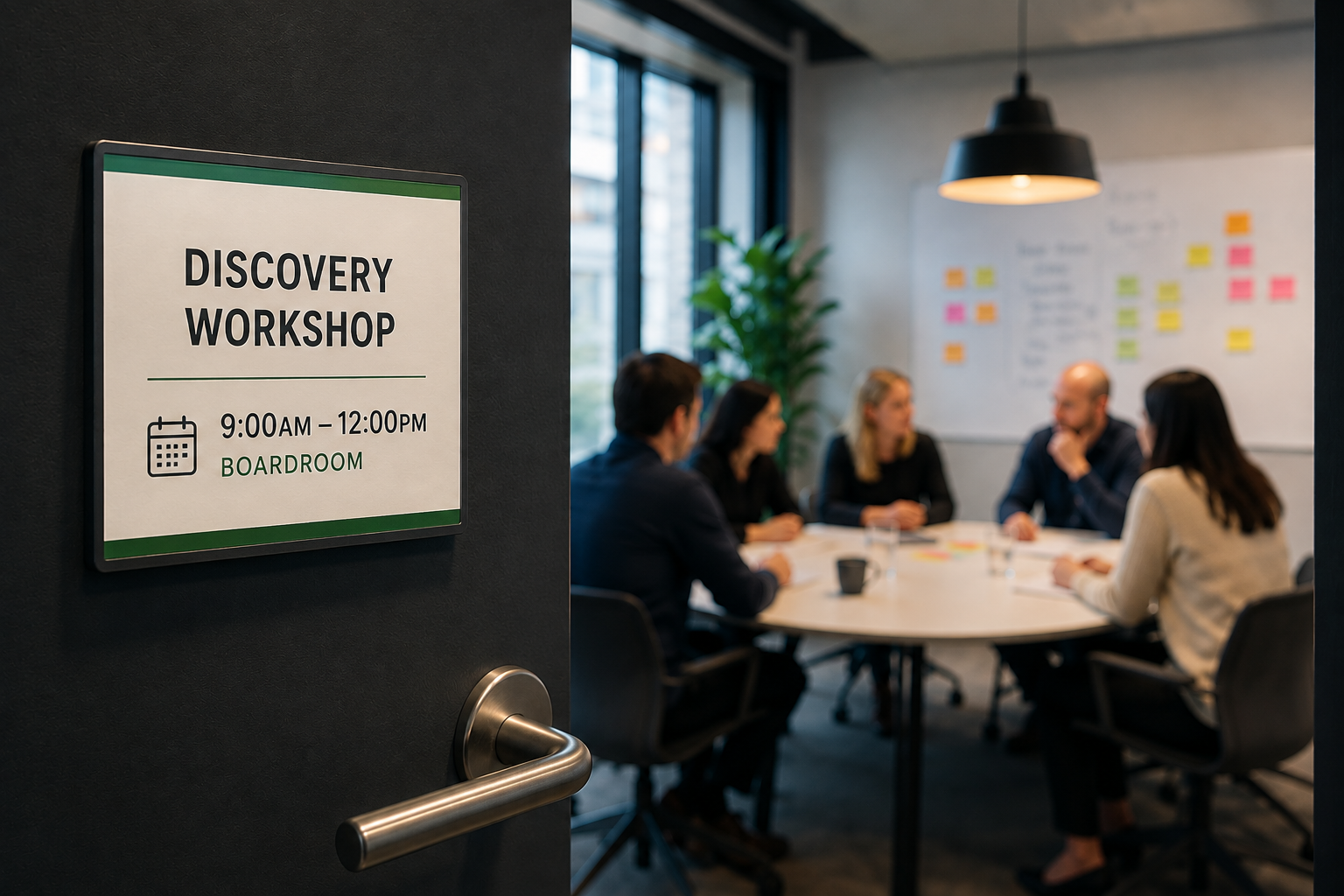
We're not suggesting every workshop needs to become group therapy. Far from it. But good facilitation requires an understanding that people don't leave their psychology at the door just because the calendar says Discovery Workshop, 9am-noon.
We bring our status, experiences, assumptions, relationships and insecurities with us.
We bring the history of what happened last time someone suggested change.
We bring the things we care deeply about protecting.
And yes, we bring a little fear.
The job isn't to pretend it isn't there. It's to create a room where people feel comfortable enough to move past it.
Because on the other side of that initial caution are usually the conversations we came for in the first place.
And, more often than not, the answers were sitting in the room all along.
Bel